A New Approach to Macroeconomic Governance: Strategy and Action
China is at a critical stage of transforming its growth model, optimizing economic structure, and building new drivers of development.
Sound macroeconomic regulation is essential for stable and high-quality growth.
A key challenge is addressing the longstanding “five overweights and five underweights” in policy orientation—such as favoring production over consumption, manufacturing over services, and investment in physical assets over investment in people.
To address this, the macroeconomic governance system is being reshaped.
The goal is to rebuild growth engines and support industrial upgrading.
This is particularly relevant for sectors like the fiberglass industry, where fiberglass mesh manufacturers are adapting to new policy signals.
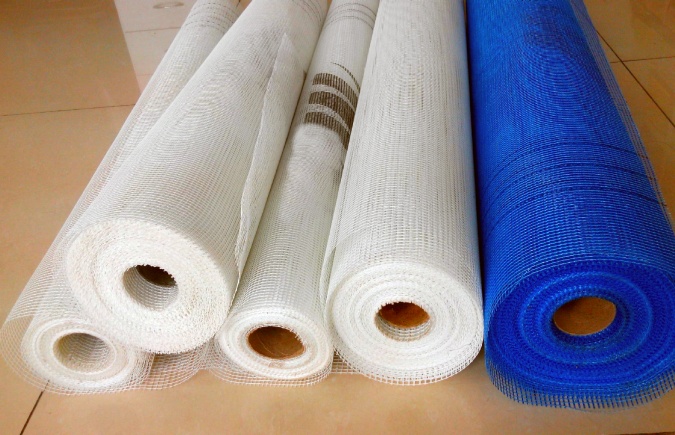
For example, corrosion-resistant fiberglass mesh is gaining traction in green building and infrastructure renewal—aligning with the new focus on quality, sustainability, and domestic demand.
I. Core Strategy: Five Major Shifts in Policy Focus
The reform agenda centers on five key transitions:
- From production incentives to a balanced approach between production and consumption
In the fiberglass industry, this means encouraging fiberglass mesh manufacturers to develop products aligned with end-user demand—such as corrosion-resistant fiberglass mesh for coastal construction or urban renovation.
- From heavy reliance on real estate and infrastructure to innovation-driven new productive forces
Fiberglass mesh is evolving through advanced materials, digital manufacturing, and application-specific solutions.
- From participating in globalization to shaping new globalization rules
Leading fiberglass mesh manufacturers are now engaging in international standard-setting, helping the fiberglass industry move up the value chain.
- From growth driven solely by new investment to balancing new investment with revitalizing existing assets
Firms are encouraged to upgrade idle facilities and optimize underutilized resources.
- From focusing on investment in physical capital to integrating investment in both physical and human capital
Greater emphasis is placed on workforce skills, R&D talent, and innovation capacity.
II. Key Actions: “Three Breaks, Two Optimizations, One Smoothing” for Supply-Demand Reform
A. Three Breaks: Removing Barriers, Bottlenecks, and Blockages
1. Breaking Barriers: Institutional Reform
- Improve the tax system by shifting consumption tax collection to later stages and allocating more to local governments.
- Strengthen fair competition review mechanisms.
- Establish early warning systems for overcapacity and reform local government performance evaluation.
Industry Insight:
For the fiberglass industry, breaking local protectionism allows quality fiberglass mesh manufacturers to scale across unified national markets and phase out low-end capacity.
2. Breaking Bottlenecks: Factor Market Reform and Asset Revitalization
- Remove household registration (hukou) barriers to labor mobility.
- Develop multi-tiered capital markets and data element systems.
- Promote securitization of infrastructure and real estate assets.
Industry Insight:
Some fiberglass mesh manufacturers are securitizing old industrial sites, converting them into innovation parks or green building material hubs.
3. Breaking Blockages: Innovation-Driven Breakthroughs
- Improve open-competition mechanisms for key technology projects.
- Reform ownership rights for scientific research outcomes.
- Foster an environment for original and disruptive innovation.
Industry Insight:
Developing corrosion-resistant fiberglass mesh requires close collaboration between firms and research institutes. Policy support accelerates commercialization and improves product performance.
B. Two Optimizations: Improving Income Distribution and Social Security
1. Optimizing Income Distribution
- Align income growth with productivity gains.
- Expand participation in returns for knowledge, technology, and data assets.
- Advance direct tax reforms, including capital gains and inheritance taxes.
2. Optimizing Social Security and Public Services
- Strengthen the national pension pooling system.
- Expand affordable childcare, education, and healthcare services.
- Stabilize the housing market through city-specific policies and expanded public housing.
Industry Insight:
With the push for affordable housing and urban renewal, fiberglass mesh is increasingly used in energy-saving retrofits and exterior wall reinforcement.
C. One Smoothing: Market Connectivity and Institutional Openness
- Unify流通rules and standards across regions.
- Align with high-standard international trade rules in areas like subsidies and government procurement.
- Streamline cross-border flows of goods, capital, and data.
Industry Insight:
Leading fiberglass mesh manufacturers are leveraging institutional openness to expand into Belt and Road markets, coordinating product exports with overseas service networks.
III. Refining Macro Policy Systems for Supply-Demand and Internal-External Balance
Fiscal Policy: Boosting Consumption and Innovation Investment
- Establish consumption guidance funds and expand subsidies for consumer loans.
- Strengthen fiscal support for basic research, applied research, and commercialization.
- Provide tax incentives for manufacturing firms transitioning to service-oriented models.
- Include urban renewal projects in local government special bond frameworks.
Industry Application:
Fiberglass industry players can use fiscal incentives to accelerate equipment upgrades and digital transformation, improving product consistency and quality.
Monetary and Financial Policy: Aligning with New Productive Forces
- Shift growth drivers from real estate and debt expansion to innovation, industrial upgrading, and equity investment.
- Encourage venture capital and private equity to invest in early-stage innovative firms.
- Develop credit products for green consumption, digital consumption, and integrated manufacturing-services models.
Industry Application:
Qualified fiberglass mesh manufacturers can access intellectual property-backed loans and digital transformation credit lines, lowering financing costs.
Open Economy Policy: Balancing Trade and Coordinating Overseas Expansion
- Optimize trade structure, expand imports of advanced technology and key components.
- Grow services trade in digital services, high-end design, and R&D.
- Introduce negative list management for outbound investment to encourage coordinated global supply chains.
Industry Application:
Leading fiberglass industry firms are building “China + N” production networks, shifting from product exports to standard-setting, branding, and ecosystem globalization.
Conclusion
Improving macroeconomic governance requires both top-down institutional design and bottom-up innovation from enterprises.
The fiberglass industry exemplifies this transition.
Through technological innovation, asset revitalization, and global engagement, fiberglass mesh manufacturers are moving from scale-driven growth to quality-led development.
As the “five shifts” and “three breaks, two optimizations, one smoothing” reforms deepen, corrosion-resistant fiberglass mesh and other high-performance materials will play a growing role in green buildings, urban renewal, and global infrastructure—contributing to a more resilient and high-quality economy.
 Hebei Jiacheng Fiberglass Products Co., Ltd