 Hebei Jiacheng Fiberglass Products Co., Ltd
全站搜索
Search the entire website
整站搜索产品中心新闻中心
点击开始搜索
热门搜索
玻纤纱系列网格布系列产品无捻粗纱三防布系列破斜纹鱼竿布其他玻纤制品
Search the entire website
Professional escort, your trusted choice
How Smart Infrastructure and Digital Services Are Shaping the Future of Manufacturing
Industrial parks serve as the backbone of modern industrial development.
As a new wave of technological and industrial revolution accelerates, digital transformation has become a critical path forward.
Leveraging digital technologies helps build new competitive advantages.
It also accelerates high-quality development.
This supports the broader goals of advancing new industrialization and cultivating new productive forces.
According to the Ministry of Industry and Information Technology (MIIT), digital transformation in industrial parks focuses on four key areas:
This area focuses on upgrading core industries through digital tools.
Parks are encouraged to guide enterprises in adopting digital upgrades.
Leading companies are supported in opening digital scenarios and technical resources.
This drives collaboration across the entire industrial chain.
Small and medium-sized enterprises (SMEs) are encouraged to adopt cloud platforms.
The goal is to build “unmanned workshops” and “lights-out factories.”
For example, construction mesh fabric manufacturers can integrate intelligent systems to automate production lines.
This improves precision, reduces waste, and ensures consistent quality—key factors for engineering mesh fabric suppliers aiming to scale efficiently.
Digital services fall into three main categories:
These services create a more connected and efficient environment for all businesses, including those in specialized sectors like mesh fabric manufacturing.
Digital management enables smarter operations through data-driven tools.
Key initiatives include:
This approach supports “one-screen park management,” improving oversight and responsiveness.
For engineering mesh fabric producers, such systems help track energy consumption and production efficiency in real time.
Strong infrastructure forms the foundation of digital transformation.
Key developments include:
These capabilities are essential for grid fabric manufacturers looking to adopt IoT-enabled equipment and smart quality control systems.
MIIT will continue promoting high-standard digital parks as a key initiative.
The focus is on accelerating digital upgrades for more enterprises in industrial parks.
Efforts will also enhance digital management and service levels across parks.
This will generate replicable models that drive high-quality development.
At the 9th Digital China Summit, MIIT will host a special session on empowering industrial parks through digital technologies.
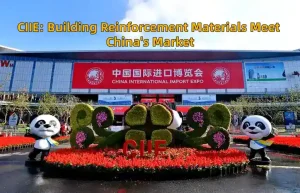


本文解析中俄关系对全球产业链的重塑效应,探讨网格布厂家在俄乌冲突背景下的新机遇,揭示玻纤网格布与玻璃纤维纱技术如何成为国际贸易博弈中的战略资源。
查看全文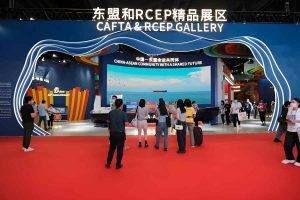
Explore how the China-ASEAN Expo 2025 creates new opportunities for fiberglass mesh manufacturers. Learn about trade trends, FTA 3.0, and how the fiberglass industry can expand in ASEAN markets.
查看全文