 Hebei Jiacheng Fiberglass Products Co., Ltd
全站搜索
Search the entire website
整站搜索产品中心新闻中心
点击开始搜索
热门搜索
玻纤纱系列网格布系列产品无捻粗纱三防布系列破斜纹鱼竿布其他玻纤制品
Search the entire website
Professional escort, your trusted choice
China’s private enterprises are demonstrating remarkable dynamism in technological innovation. Breakthroughs are emerging across fields like operating systems, new energy, quantum computing, and synthetic biology, showcasing the vibrant growth of new productive forces. Beyond digital tech, the new materials industry is also rising quietly. High-performance materials like alkali-resistant fiberglass mesh and glass fiber yarn have become invisible engines powering manufacturing upgrades. Specialized manufacturers in these areas are carving out new growth paths through independent innovation.
In overcoming challenges in the IT sector, private firms have focused on R&D. They’ve developed key domestic technologies like processors and databases. For instance, Loongson’s 3C6000/D servers achieved 100% domestic core components. Dameng Database built a distributed database ecosystem. This drive for innovation extends to materials science.
High-performance composites, notably glass fiber yarn, are now crucial. Their light weight and high strength make them ideal for structural parts in new energy vehicles, aerospace, and smart devices. They are key supports for enhancing manufacturing quality and efficiency.
In construction, quality fiberglass mesh suppliers have upgraded their tech. They offer corrosion-resistant, anti-aging, and eco-friendly products. These support green buildings and smart city development. For example, CATL’s sodium-ion battery uses composite anti-freeze electrolyte tech. Its protective shell incorporates high-performance glass fiber yarn for stability in extreme conditions. This cross-sector tech synergy exemplifies the forward-looking spirit of private enterprises.

Private companies are venturing into uncharted territories. Advances in high-altitude wind power, quantum computing, and synthetic biology show deep tech-industry integration. In the new materials sector, innovative products are reshaping traditional industries.
A Shenzhen tech firm, for instance, combined fiberglass mesh with smart sensors. They created a “smart mesh system” for real-time building structure monitoring. This offers a fresh solution for smart cities.
Furthermore, glass fiber yarn producers collaborate with universities. They tackle material formation challenges. Hubei Vogue Biology uses synthetic biology to produce PHA material. When combined with glass fiber, it creates strong, biodegradable packaging. This reduces carbon emissions and meets industrial needs. This dual “material + tech” innovation is pushing Chinese manufacturing toward greener, higher-end outputs.
The “Private Economy Promotion Law” injects confidence into tech innovation. Policy support, R&D tax deductions, and IP pledge financing help small mesh fabric manufacturers compete effectively.
A Suzhou company, leading a national R&D project, developed high-temperature resistant fiberglass mesh for new energy batteries. It secured hundreds of millions in loans, speeding up mass production.
Industry-academia-research collaboration is deepening. Guangzhou Shiyuan Electronics co-built labs with universities. They apply smart interactive tech to new building material R&D. Beijing Boson Quantum explores using quantum computing for material simulation. This provides computational power to optimize the molecular structure of glass fiber yarn. This collaborative ecosystem is helping the new materials industry transition from following to leading.
From foundational tech breakthroughs to pioneering new industries, China’s private enterprises are reshaping their competitiveness through innovation. The rise of niche sectors like fiberglass mesh and glass fiber yarn fills supply chain gaps. It also lays a solid foundation for a “smart manufacturing powerhouse.” Looking ahead, with continued policy support and faster tech integration, the new materials sector, alongside digital tech, will inject stronger momentum into China’s high-quality economic development.
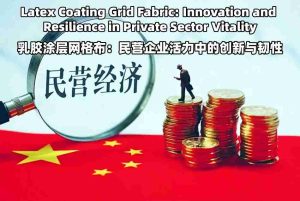
The private sector is a key driver of China's economy. It thrives on innovation, operates with growing confidence under the rule of law, and demonstrates remarkable resilience. From high-tech medical robots to smart manufacturing, businesses are ...
查看全文
Multiple Chinese ministries have outlined key tasks for 2026, focusing on boosting consumption, investment, and fostering new growth drivers. This policy direction will accelerate infrastructure and industrial upgrades, creating significant oppor...
查看全文
Recent data shows China's economy remains stable amid global challenges. Tax reports reveal active enterprises increased by 9.8% in the first 10 months of this year. Business investment in equipment has risen steadily. The IMF also raised China's...
查看全文
In 2025, China’s industrial economy moved forward in four ways: steady, progressive, innovative, and vital. This progress builds a strong start for the next Five-Year Plan. The manufacturing sector, especially green materials, performed well. E...
查看全文